Surprise surprise!!!! IVF!

Well my blog post title has given the game away, so in summary…our next step will be In-Vitro Fertilisation!

This morning we met with our RE who reviewed our progress so far, or lack there of.  Our tests were all normal, the three IUIs all went according to plan (except of course for the pregnancy part), I responded well to the letrozole with 2-3 follicles, Chris had awesome sperm.  We remain unexplained, but she does still suspect endometriosis.  If my period pains were so bad that they affected my life and I wanted that to change then she would recommend a laparoscopy.  This surgical procedure comes with risk, side effects and can take several months to return to normal, so if my periods were so bad this would be the way forward, however, in my case the benefits are unlikely to outweigh the downsides.  So she recommends we move straight to IVF.  She explained the overall process:

Week 1 to 2 – after menstruation I start birth control pills for about 14 days, these help to control my hormones

Week 3 – start injectable medications to control ovulation and stimulate follicles to grow – many many more than the 2-3 that were stimulated with letrozole in order to get the best chance of retrieving some ‘good eggs’.

Week 4 – continue injectable medications…have ultrasounds every other day to monitor follicle growth, along with blood work to monitor hormone levels.  When the follicles are ready, we will inject the hCG Ovidrel trigger and 36 hours later I go for egg retrieval surgery.  Under sedation my eggs are extracted from my ovaries.  Chris provides his sperm and my eggs are fertilised in-vitro.  After the eggs have been fertilised, the embryos grow for a few days under close watch.  Then if they survive, one or two embryos are transferred directly into my uterus.

Week 5-6 – start injectable progesterone until the big pregnancy test either says – “woohoo you are preggers”! then I stay on progesterone, or…”booooo it’s a BFN my friend”, then we will…..well, let’s not go there right now.

This is everything I expected her to say, except for two things slightly different.

  1. First, I need to go for a hydrosonogram.  This procedure will produce a 3D ultrasound of my uterus.  I will have this last test because I have a severely retroverted uterus they could not see it very well on the HSG X-ray, they want to double check that there is nothing preventing the implantation stage.
    My HSG X-ray with my retroverted uterus (it's hard to see because it's hiding behind the catheter)

    My HSG X-ray with my retroverted uterus (it’s hard to see because it’s hiding behind the catheter)

    I have been promised this does not hurt quite as bad as the HSG.  THANKFULLY!!!!

  2. Secondly, she thinks it would be a good idea to do Intra-Cytoplasmic Sperm Injection (ICSI) because we are ‘unexplained’.  ART_logoThis is a procedure where a single sperm is selected and injected directly into the egg rather than normal IVF where the sperm is placed near the egg.  This procedure is an extra $2,420 so we need to check whether our insurance would cover this or not.

Talking of costs….it is going to cost $9,075 for the IVF which includes office visits, endocrine monitoring, ultrasounds, retrieval, transfer and first pregnancy test.  Plus, it is an additional $400 for the anaesthesia. Medication will be approximately $4,000 to $6,000.  Then the ICSI procedure is $2,420.  Cryopreservation is $1000 then $60 a month for any embryos frozen.  Yikes!!!!  But we roughly knew this anyway, it’s just a bit scary seeing it listed out like this.

So for now, we start the negotiating with our insurance and the diary planning. It’s looking like a late June start.

Ultimately, today I walked away with this one key figure she gave: for us – a 50% chance of success.  In my mind that is pretty amazing.  I’ll take that.  I’ve always been a glass half full kind of girl, lately it’s been half empty, today I think I’ve been topped back up 🙂

Thank you for all your support and kind thoughts so far, I’m feeling pretty encouraged this will work!

Understanding: #YouAreNotAlone, #NIAW, #WeAreNotAlone

NIAW-CMYK

The baby shower

I sit in the corner, quietly observing the group, hoping no one talks to me and asks me how I am.  I’ve been dreading this day for weeks.  I am not really sure what the etiquette of baby showers is.  I’ve learned about wedding, birthday parties, funerals and baptism etiquettes, but as a Brit living in the US, baby showers are new to me.  One thing I do know for sure is that sobbing away in the corner, trying to make sure no one sees is not part of the celebrations.  Why all the tears?  Because this should be my time for my baby shower.  I don’t mean to sound self-centred, but you see we have been trying to conceive for 17 months now.

Like the singleton table set aside at weddings, baby showers should come with a table reserved for infertiles.  After all, 1 in 8 couples of reproductive age could have a seat at this table.

My tears are short lived, of course, as the excitement of adorable ‘mini-me’ baby gifts and funny games take the course of the day.  Our friend who has that beautiful pregnancy glow to her skin, was happy.  So happy.  For me this was all I needed to prevent me from drowning in my own misery and enjoy the party.

Unfortunately, it seemed that not all of us could cope this well.  One of the guests left within 10 minutes of arriving.  She had driven hundreds of miles for the baby shower.  Why would you drive all that way just to stay for 10 minutes?  And so the speculation and rumours started.  My husband interjected with a suggestion “Perhaps she is trying for a baby and found it all too much?”.  We both looked at each other with that ‘knowing’ look.  Sadly, no one in the room bought this excuse, dismissed it and the speculation continued. The departing lady, who I did not know personally, may have been infertile, or perhaps she had some other good reason for leaving the baby shower as quickly as she had arrived.  Statistically, the chances were high that at least two of us at the shower were suffering from infertility. With both my husband and I in the room, it was easy to wonder who else is silently suffering?  If it was this lady, I wish I could have told her:

You are not alone

I would have held her hand, hugged her and told her it’s OK, I understand, we can face this disease together.

wish2

But for some people experiencing infertility, a hug from a stranger will never make the pain and hurt go away.  I know this.  I feel more comfortable on my infertility journey than I ever have been because I discovered a place where hugging strangers is quite a common place. The blogging world.  I have been surprised to discover comfort and understanding from the ‘virtual’ hugs, support, discussion and love from the biggest group of ‘strangers’ I know.  It’s not just strangers that have joined us on our journey, but a small group of family and friends too.  The ability to communicate, open my heart and share my feelings has been a therapy for me.  But not everyone we care about knows of our struggles because it is not easy to talk about.

Please help us on our journey.

As it is infertility awareness week, we are taking a big leap and inviting you to join us on our journey – or more aptly put – the hunt for the great pudding club.  You have been invited because we trust and love you.  We want you to know that this week we will be starting a new chapter in our journey.  Ironically it is National Infertility Awareness Week.

We have been diagnosed with unexplained infertility, it is a surprisingly common diagnosis for about 25% of those with infertility.  To date we have tried three rounds of artificial insemination, known as IUI (Intra Uterine Insemination).  This week has been particularly difficult for us as our final prescribed round of treatment failed.  With each round of treatment the sad news of our failure does not get any easier to digest, rather, the sadness stacks up and our hearts grow heavier.
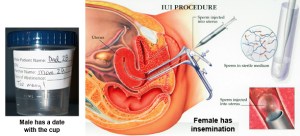
The IUI procedure summed up

The IUI procedure nicely summed up

We are now at the cross roads stage where we do not know exactly which route we will take: IVF, gestational carrier, adoption or even child-free.  Whichever route we do decide to take, we want you to be there with us.

How you can help us

Opening our hearts about our infertility journey leaves us with open wounds, and the occasional feeling of self-inflicted nausea (wishing it was nausea from pregnancy, of course!).  If you would like to come with us we have some ideas on how to help us through our journey…

  1. Ask us how we are doing, and if we do not to tell you every intricate detail of our treatment, please don’t be offended. Sometimes we just don’t want to talk about it because we have been thinking about it all morning and just stopped thinking about it.
  2. We love hearing stories about how your little one was conceived, especially the funny stories. But please do not tell us that we should try this position, or that method.  After all, I am pretty sure we have tried everything we could possibly google.  Legs up, from behind, on top, downward dog, on holiday, when drunk, herbal tea, with a full moon etc… The chances are slim that we will be able to conceive naturally.
  3. Although telling us about your friend that conceived after X time, with X procedure might seem affirming, everyone with infertility is different and so your story probably won’t apply to our situation. The obstacles each one of us faces will be different and the path we take will be unique.
  4. Please don’t ask us 14 days after our fertility treatment procedure if it worked. If it worked, we will tell you in our own time if we find out I am pregnant (it won’t be long after we find out, I am sure the excitement will be too much!); if it didn’t work, we need some time for ourselves to contemplate our next steps and to just have a big old cry.
  5. We like emails, phone calls, skypes and messages that remind us that there are other things going on in the world. We don’t want to think about infertility and babies all the time.  It can be emotionally exhausting at times.  Send us photos, tell us funny stories or pass on a couple of memes.  Please don’t feel like you are treading on egg shells around us or worry that we are too busy to speak to you.
  6. We also want to hear about your little ones too and would love to be invited to events and parties too, after all we are going to be parents sometime soon too 🙂
  7. Finally, please don’t suggest ‘You can just adopt’ to us. If you look into adoption you will quickly learn that this process is not easy, cheap or free from emotional baggage.  There are no guarantees. The casual statement of ‘you can just adopt’ makes it seem like not being able to conceive isn’t that big of a deal and ironically is often said by people who already have their own children. Such a casual, throw away statement makes the whole process seem like we can simply go to the store and pick the type of baby we want from the range on the shelves.

The list above is specific to us, not everyone who suffers infertility will feel comfortable with what we are suggesting, each couple will deal with it in a different way, so if you know someone else who is going through this you should ask them how you can help.

Regardless of the individual items on people’s lists, one thing we can all do is be cautious, being a little more sensitive and take a little time to think before asking anyone about having children. If you know a couple that has recently married it is easy to ask ‘so when will we hear the pitter patter of tiny feet, eh?’ but what if the couple is struggling to conceive? Such an innocent question and yet it could be devastating. We’re not saying don’t ask questions, just don’t make assumptions. Until we had gone through this experience I would often be the one asking such questions, I only realise now how hurtful those questions could have been.

What else can I do?

Come join us, support National Infertility Awareness Week by adding a twibbon to your facebook profile.  You can follow my blog or facebook page, read the links below to help understand more about infertility.  Share your awareness so that others who quietly suffer do not feel like they are alone.

Thank you for understanding as we go through some challenging decisions and supporting us, giving us hope like you have already, we feel very much loved in the knowledge that we are not alone on our journey.

Dani & Chris X

#WeAre1in8 #YouAreNotAlone #WeAreNotAlone

Beer, Beer and more Beer!! Wait – should you really be drinking beer?

Beer – the cool, refreshing, golden nectar.  My first beer was admittedly at a young age of 13.  I hated it, but that’s what everyone else was drinking, so beer it was.  As my palette has grown accustomed to the varieties and tastes I have become a distant admirer of certain beers.  Particularly German Hefeweizen beers.  So during my 2WW it was difficult to come all the way to Germany and avoid the stuff…..so……here I am – two beers in hand!!!

Hofbrauhaus in Munich. Mmmm Beer!

Hofbrauhaus in Munich. Mmmm Beer!

Officially, Chris and I both gave up alcohol almost 17 months ago.  I say ‘officially’ because we have both had alcohol in these months as we have caved on occasion.  However, we have significantly reduced our intake of alcohol to maybe one or two beers/glasses of wine a month, if at all.  The reason?  Because ‘they’ tell us alcohol affects both fertility and the development of the foetus in the early stages.

It is logical, after all, if alcohol is capable of making you do silly things with your mind, then surely it can affect other things too.  I have no qualms in giving up alcohol, plus it saves on the purse, and reduces the calorie intake (never hurts).  There are many conflicting views about the impact of alcohol on fertility.

The UK Government suggests a pregnant woman, or a woman who is trying to conceive should drink no more than 1-2 units once or twice a week (ie one small glass of wine).  Their drink aware campaign (www.drinkaware.co.uk) website is quite informative about alcohol and fertility for both men and women.

One interesting bit of research I read about from Harvard University found that couples undergoing IVF found that women who drank more than six units per week were 18% less likely to conceive, while men were 14% less likely*.  Although this statistic sounds quite high you will only need to drink 3 times a week or more, that is quite a lot.  LAst time I drank that much was at University!!  Generally, I go with the school of thought that one small drink every once in while is unlikely to have any significant impact.  But as the stakes grow higher and more money is invested in our treatment, the more cautious I am about alcohol intake.

So what about that picture above with me holding two beers from Friday night?  Well they actually are not mine, they are the beers of my new colleagues.  BUT! I did enjoy three non-alcoholic Weizen beers!  Obviously the fact that I had three meant I must have enjoyed them.  It was only after one of my German students told me that he was taking a case of the non-alcoholic stuff back to Rome with him that I thought I should give it a go.  Usually, non-alcoholic beers remind me of the bitter taste of Beck’s non-alcoholic that was served when I was on my tours of duty in Afghanistan.  Beggars can’t be choosers, but that stuff put me off it all for several years.  Well at least until now that is.

The non-alcoholic beer definitely doesn’t give you that light headed happiness feeling you would ordinarily experience with the alcoholic version.  But throughout the night I realized that I felt comfortable drinking with my new friends without the pressure of feeling like I had to drink.  In fact near the end of the evening, one of my friends pointed to my glass and said to the waiter “I’ll have what she’s having”, I quickly pointed out it was non-alcoholic.  Obviously he immediately changed his mind, and looked disappointed at me.  He was disappointed because all along he thought I was keeping up with the lads without getting pissed and I was drinking them under the table!  But it was quickly laughed off and nothing more was said.

I think I will try these non-alcoholic options more.  In fact, a fellow blogger (the longest journey) came up with a cracking idea….to put some juice/fizz in a wine glass to give the impression of drinking wine.  Psychologically, that surely has to have the same effect as a non-alcoholic beer.  Well I’m going to try it and let you know 😉

At the top of Kofel in Oberammergau.

Bye Bye Bavaria!  Thank you for the beer discovery!

*Harvard University Website. Alcohol hinders having a baby through IVF, couples warned.

Accessed from: http://news.harvard.edu/gazette/story/2009/10/alcohol-hinders-having-a-baby-through-ivf-couples-warned/

Work in Progress…ARTApp

I successfully completed another module in my Data Science course! Woohoo!! Eight modules down, one to go. Now I have one week off of study, then onto the home straight.  I can’t wait to finish it.

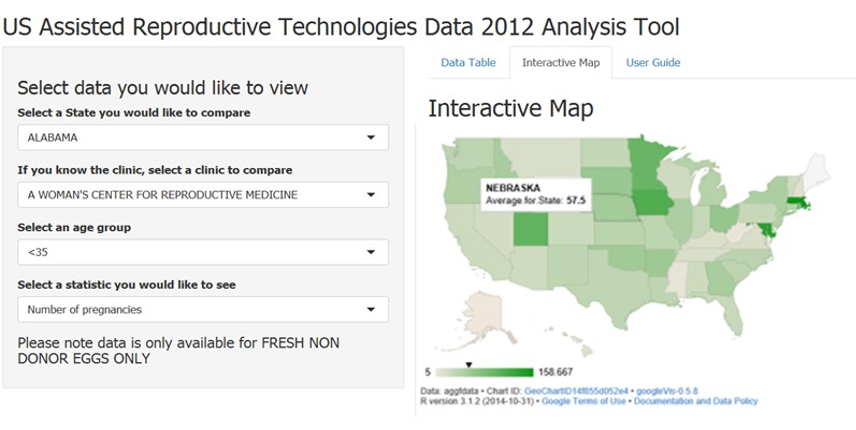
Part of my final project was to develop an online web App; I decided to develop an App that uses the data provided by the CDC on Assisted Reproductive Technology and presents the data in more user friendly way.  I bit off more than I could chew for this project because the data the CDC provides is a bit messy and required some cleaning up in order that I could manipulate it easily.  Now I have ‘cleaned’ the data, I need to spend a bit more time making the visualisation useful.  I got 100% for my project so I passed with flying colours, but I have a lot more to do before I share it with a wider online community.  You can have a sneak preview!

You can see my ARTapp here.  It was supposed to look a bit more like this…

Screen shot of my ARTApp

Screen shot of my ARTApp so far

My idea is that someone can select a state they are interested in, it shows all the fertility clinics in that given state, then the user can select a fertility statistic they are interested in comparing their clinic against the state wide average.  There is also a map of the states that shows the statistic average for each state. This is just a prototype for now, I will keep working at it and include all data available from CDC, not just data for fresh embryos.  Also add in some more interactive charts for looking at ART data over time.

Now, wouldn’t it be good to know what the IUI stats are like too?

View the latest U.S. Fertility Clinic Data

What is the probability of IUI success?

Our Doctor told us that we have a 20% chance of success with our IUI treatment (Letrozole Day 3-7, Ovidrel trigger 36 hours before IUI procedure and progesterone suppositories (50mg) for two weeks after IUI).  After three rounds, that would be a cumulative chance of success of 60%.  But this probability is a calculated estimate based on many factors that our doctor knows about us.  For example, if you were diagnosed with unexplained infertility the probabilities of success are lower than if you have been diagnosed with an ovulation related dysfunction.  Age, number of years trying to conceive and sperm quality are all examples of other factors that will influence your probability of success.

Success rates for IUI?

Success rates for IUI?

There are many predictive models out there to determine likelihood of success of IUI.  Each model seems to be slightly different, but in general they tend to range between 9-23% success for unexplained infertility, and the important factors that determine this success also seem to vary from model to model.  This is probably the real reason why that if you were to google ‘the probability of IUI success’, you won’t find much of a straight or clear answer.

Why do I care?  The difference between 10% (a one in ten chance) compared to 20% (a one in five chance), is psychologically different and I’d like to prepare myself for these seemingly different odds!  I trust my doctor, but I want to know more about why it’s 20%.

I spent several hours trying to find something useful that explained the most recent stats.  But the website with the most useful statistics explaining the different probabilities is www.advancedfertility.com.  However, the website is confusing, statistics are hidden away in text paragraphs that require reading several times, multiple hyperlinks to different pages that break up ease of understanding, how recent is this information and it is not always clear where their statistics have come from.

If you google ‘the probability of IVF success’ there is a plethora of useful information and supporting data (because the govt mandates the data is collected by clinics), also there is a really good resource, Society for Assisted Reproductive Technologies (http://www.sart.org/) who summaries the most recent data at the clinic level and the national level.  They even have a patient level ‘Predict my success’ interactive tool.

So, I herby call for greater transparency and clarity on IUI success rates, similar to what can be found online for IVF success rates.  I’m not looking for exactness, just more openness.

If you know of good resources to help understand success rates of IUI, please comment below and share!

Statistics statistics – infertility and treatment – who to believe?

Did you know?? Over 1% of all infants born in the US are conceived using Assisted Reproductive Technology*.

Luckily I am an analyst by trade, so I am quite aware of the lies, damn lies and statistics.  I am quite skeptical when it comes to stats that don’t explain the data source.  A lot of websites quote stats and don’t tell you either where the data originated, how it was collected or how it was analysed.  So which stats can you believe?

I am undertaking a small project for an online course in data science – part of my project is to develop an online app.  The app can be anything I like, but it has to be an interactive tool using data.  Seeing as I have been looking at lots of statistics online about fertility treatments, I thought, why not design my own web app that allows a user to interact with all that data out there?  Hmmmm perhaps I am being ambitious.  But I have a couple of weeks to complete it – so lets see!  In the mean time, I have been doing some research on potential data sources…

The most up to date fertility treatment data I have found so far is from the Centers for Disease Control and Prevention (CDC).  (Ha! I didn’t expect to find the data here!!)  Apparently there is an Act that mandates all clinics performing Assisted Reproductive Technology to provide annual data to the CDC.  I think this data is THE most comprehensive (or certainly largest) source of data to understand the factors that contribute to a successful birth when using Assisted Reproductive Technology*.  The CDC has been collecting data since 1995.  All their data is freely available to download along with reports and interactive tables.  The most recent data released is from 2012, collected from 256 clinics with in the US.

When I was reading the CDC 2012 report that was published in 2014 I found an interesting stat that surprised me – In 2010 about 7.4 million women aged 15-44 received infertility services at some time in their lives.  That makes it about one in ten women of that age group.   If I look at all my friends and family on my facebook in that age group, that could be 12 of my friends affected somehow.  Woah.

Anyway, the data provided by the CDC gives stats on almost 98% of clinics in the US.  The link below (provided by the CDC website) takes you to an interactive tool that allows you to see the data for your fertility clinic – they probably report it on their website.  But you have to be careful when you look at the numbers and what they all mean.  I’d highly recommend reading the whole report to help understand it all.  I did not see this data before we decided which clinic to use.  To be honest the number of choices for us weren’t particularly big, but we did have a choice.

The data looks good for my project, I just need some ideas on how to make a useful app out of it.  If anyone has any suggestions on what they think would be a useful way to see the data I’d be interested to hear from you.  I’ll keep you updated on my stats research as I come across it…

Ps. Hope this post wasn’t too geeky!! I can be quite geeky sometimes.

View the latest U.S. Fertility Clinic Data

*Note. The CDC define Artificial Reproductive technology as a procedure that involves surgically removing eggs from a woman’s ovaries, combining them with sperm in the laboratory, and returning then to the woman’s body or donating them to another woman.  They do NOT include treatments in which only sperm are handled (ie. IUI) or procedures in which woman takes drugs only to stimulate egg production without the intention of having eggs surgically retrieved.

Mild Insurance Panic!

This evening I was helping Chris with filing his taxes and was searching through our medical paperwork.  I pulled out our insurance policy booklet and flicked through it to read about infertility treatment coverage.  I already knew we were 100% covered, but what I caught sight of was that we needed prior approval for certain procedures – such as IUI! Whoops…!!

We are learning a lot about medical insurance, policies, bills, coverage, approval, pharmacies – the lot!  But there is so much to keep tabs of that I am not used to.  This was one of them.

After mildly panicking that I had screwed up, I called up my insurance company, and phew, I discovered that I did not need prior approval for this.  Panic over.  These insurance booklets can be very confusing.  Especially when our insurance is worldwide cover, so depending on which country you are in, depends on the process. Grrrrrrr.  However, I am entirely grateful that I do have amazing insurance.

I appreciate the NHS – I really do, particularly when it comes to the complicated billing system we have here.  However, if we were in the UK right now things would be different.  NHS guidelines used to be that IUI treatment was offered on the NHS if:

However, new guidelines released in 2013 state that IUI is no longer offered in these circumstances. Instead, we would probably have been advised to keep trying to conceive through regular unprotected sexual intercourse for a total of two years. Only after this time we may be offered in vitro fertilisation (IVF).  So if we were in the UK right now we would be 10 months and counting, then going straight to IVF.  That would be pretty scary.  I’m kind of glad we are where we are right now in the US!!

It can all get a little confusing sometimes

It can all get a little confusing sometimes